Schema Sprawl and the Quarterly Cost of Unmaintained CMS Field Definitions in Payment Pipelines
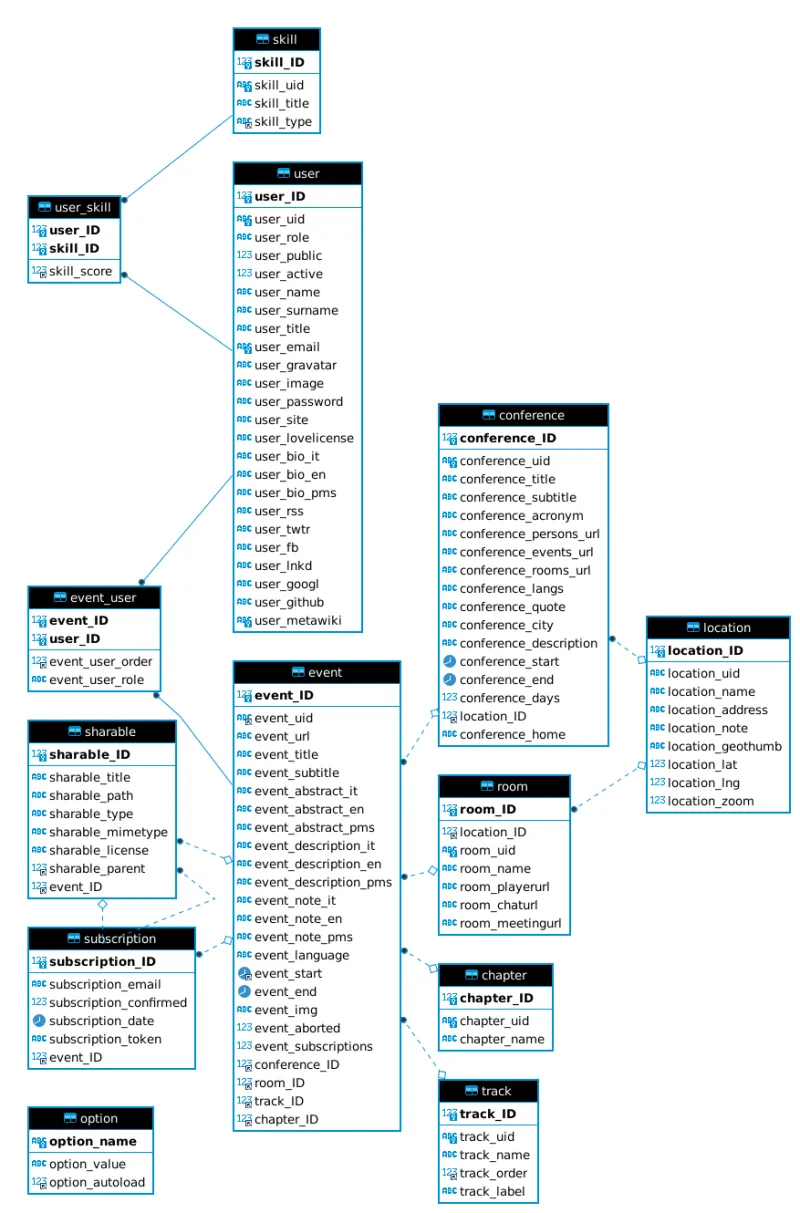
Photo: Valerio Bozzolan, CC BY-SA 4.0, via Wikimedia Commons
The Problem That Grows Quietly in Plain Sight
Most engineering teams notice the moment a payment API call fails. What they rarely notice is the slow accumulation of CMS field definitions that make those failures progressively harder to diagnose and resolve. Over time, content schemas expand to accommodate one-off business requirements, deprecated product lines, regional variations, and experimental features that never shipped. Each addition seems reasonable in isolation. Collectively, they constitute a form of structural debt that compounds every quarter.
For teams operating at the intersection of content management and payment processing, this debt carries a specific and underappreciated cost. Payment processors expect clean, well-typed, consistently structured data. CMS schemas, left ungoverned, tend to drift toward ambiguity. The gap between those two realities is where transaction delays, mapping errors, and reconciliation failures originate.
How Field Bloat Takes Root
CMS field proliferation rarely begins with negligence. It begins with legitimate needs: a marketing team requires a promotional pricing field for a seasonal campaign, a compliance requirement introduces a tax classification attribute, a new payment processor integration demands a supplemental merchant category code. Each field is added with good intentions and minimal documentation.
The trouble is that removal is almost never prioritized with the same urgency as addition. Fields that served a temporary purpose linger in the schema long after the campaign has ended or the processor has been replaced. Optional fields multiply. Nullable columns accumulate. And every new developer who joins the team must now navigate a schema that reflects not the current state of the business, but the entire archaeological history of every decision made since the CMS was first deployed.
In payment contexts specifically, this matters because mapping logic must account for every field that could conceivably appear in a payload. When optional fields number in the dozens, the conditional logic required to handle them correctly becomes a maintenance burden in its own right.
Versioning Conflicts as a Downstream Symptom
One of the clearest signals that field bloat has reached a critical threshold is the emergence of versioning conflicts between CMS schema revisions and payment API contracts. When a CMS schema is modified—even to rename or deprecate a single field—every downstream integration that references that field must be updated in coordination. In a well-governed schema, those dependencies are documented and minimal. In a bloated schema, they are numerous, poorly documented, and frequently discovered only after a production incident.
Consider a common scenario in mid-market e-commerce operations: a CMS field originally labeled discount_code_applied is renamed to promo_reference_id during a platform migration. The payment integration layer, which uses that field to populate a processor-specific transaction metadata attribute, is not updated simultaneously. For several days, transactions process without the required metadata. Reconciliation reports begin to diverge. The root cause takes hours to isolate because the schema change was not communicated across teams.
This is not an edge case. It is a predictable consequence of schema growth without governance.
The Debugging Tax Is Real and Measurable
Engineering teams often underestimate how much time is consumed by debugging issues that originate in schema complexity rather than logic errors. When a payment transaction fails or produces unexpected behavior, the investigation typically begins with the payment processor's error response. But when the root cause is a malformed or missing CMS field, the path from symptom to cause runs through multiple abstraction layers: the CMS data model, the API transformation layer, the processor's field validation rules, and often a webhook delivery log that may or may not reflect the original payload accurately.
Each additional optional field in the schema increases the surface area of this investigation. Teams that have allowed field bloat to accumulate over several years frequently report that what should be a one-hour debugging session routinely extends to a full business day. Multiplied across a team and annualized, that overhead represents a significant and largely invisible engineering cost.
A Framework for Field Lifecycle Governance
Addressing schema sprawl requires a structured approach rather than periodic cleanup sprints. The following framework is designed for teams managing CMS schemas that feed directly into payment processing pipelines.
Define field ownership at creation. Every field added to a payment-relevant CMS schema should have a designated owner—a team or individual responsible for its continued relevance. Without ownership, fields become orphaned the moment the person who requested them moves to another project.
Establish a mandatory deprecation pathway. Before any field is marked optional or removed from active use, it should enter a formal deprecation state. This state should be documented in the schema itself, communicated to all integration owners, and maintained for a defined period—typically one to two full release cycles—before the field is eligible for removal.
Audit field usage against actual transaction data quarterly. Rather than relying on documentation to determine which fields are in active use, query your transaction logs and webhook payloads directly. Fields that appear in fewer than a defined threshold of transactions over a rolling ninety-day window should be flagged for review. This data-driven approach surfaces candidates for deprecation that documentation alone would miss.
Enforce payload contracts at the integration boundary. Rather than allowing the payment integration layer to handle arbitrary field combinations through conditional logic, define strict payload contracts that specify exactly which fields are required, which are permitted, and which are explicitly excluded. Any CMS field not included in the contract should be stripped before the payload reaches the processor. This approach limits the blast radius of schema changes and makes the integration layer dramatically easier to test.
Version your schema changes alongside your API versioning strategy. CMS schema modifications that affect payment-relevant fields should follow the same versioning discipline applied to external API changes. That means maintaining a changelog, incrementing a schema version identifier, and coordinating rollout with all downstream consumers before changes go live in production.
The Compounding Effect of Deferred Action
Field bloat does not resolve itself. Each quarter that passes without active governance adds new fields, further obscures the purpose of existing ones, and deepens the integration debt that payment teams must navigate. The cost of addressing schema sprawl early—through the framework described above—is substantially lower than the cost of untangling a schema that has been accumulating unmanaged fields for three or four years.
For US-based organizations subject to PCI DSS requirements, there is an additional dimension to consider: schema complexity can complicate the audit process by making it more difficult to demonstrate that payment-relevant data is handled consistently and in accordance with documented controls. A lean, well-governed schema is not only easier to maintain—it is easier to defend.
Starting the Remediation Process
For teams inheriting a bloated schema, the first step is not deletion—it is inventory. Catalog every field in your payment-relevant CMS schemas, document its stated purpose, identify its owner, and cross-reference it against actual usage data from your transaction history. That inventory will reveal, often within hours, a significant number of fields that are either unused, duplicative, or no longer aligned with current business requirements.
From that baseline, a phased deprecation plan becomes tractable. The goal is not a perfect schema achieved overnight, but a governed schema that improves measurably each quarter rather than degrading silently.