Clocks Out of Sync: How Timestamp Fragmentation Across Your CMS and Payment Stack Makes Reconciliation Mathematically Impossible
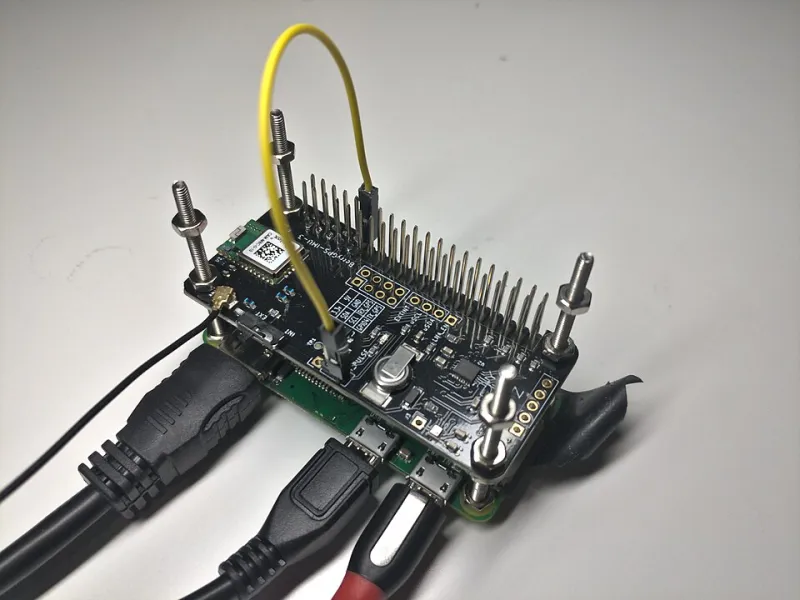
Photo: Steven Baltakatei Sandoval, CC BY-SA 4.0, via Wikimedia Commons
Every engineering team that operates a commerce stack understands the ritual of end-of-month reconciliation. Finance pulls the payment processor report. Engineering queries the CMS order log. Someone exports a middleware event ledger. And then the numbers do not match—not by a dramatic margin, but by just enough to be inexplicable. A handful of transactions sit in a gray zone: succeeded according to one system, pending or failed according to another.
Most organizations attribute these discrepancies to network latency, retry logic, or edge-case API behavior. Rarely do they trace the root cause to something far more fundamental: the systems involved do not agree on what time it is.
Timestamp misalignment is one of the most underestimated sources of reconciliation failure in modern CMS-to-payment architectures. It is also one of the most expensive, because the damage compounds silently across every billing cycle until the variance is too large to dismiss and too fragmented to audit.
Why Time Is Not a Solved Problem in Distributed Stacks
It is tempting to treat timestamps as a commodity—a detail handled automatically by the infrastructure. In practice, every layer of a typical commerce stack introduces its own temporal assumptions.
A headless CMS might store content publication timestamps in the server's local timezone, which varies by hosting region. The API middleware layer might convert timestamps to ISO 8601 format but neglect to enforce UTC offset normalization. The payment processor almost certainly records transaction timestamps in UTC, but may surface them to the merchant dashboard in a configurable local timezone that differs from what the API returns programmatically.
The result is a stack where a transaction initiated at 11:58 PM Eastern Time on March 31st appears in the CMS order log as a Q1 transaction, in the API event ledger as a Q1 transaction, and in the payment processor's UTC-anchored ledger as a Q2 transaction. No error is thrown. No alert fires. The transaction succeeded. But it now occupies different fiscal quarters in different systems, and your quarterly reconciliation has a structural gap that will not close regardless of how many times you rerun the export.
The Three Failure Modes That Compound the Problem
Timezone naivety in CMS field definitions. Many content management systems—particularly those built on legacy frameworks or configured by teams without a strong distributed systems background—store datetime fields without explicit timezone metadata. A field typed as datetime in a CMS schema may store values in the application server's local time, the database server's local time, or a timezone inherited from a user's browser session during data entry. When that timestamp is later serialized to JSON and forwarded to a payment API, the receiving system has no reliable way to interpret its absolute position in time.
Clock drift across containerized and serverless infrastructure. Modern deployments frequently distribute workloads across multiple cloud regions, container orchestration clusters, and serverless function environments. Each of these environments maintains its own system clock, synchronized via NTP at varying intervals. Under normal conditions, drift is measured in milliseconds. But under load, during cold starts, or following infrastructure events, drift can extend to seconds or even minutes. For payment workflows where idempotency windows, authorization expiry, and settlement cutoffs are measured in seconds, even modest drift can push a transaction across a boundary that neither system anticipated.
Inconsistent timestamp normalization in API transformation layers. The middleware or integration layer that sits between a CMS and a payment processor is frequently where temporal data loses its integrity. Transformation functions that convert timestamps for API consumption may apply timezone offsets inconsistently, strip UTC markers during serialization, or introduce implicit conversions when parsing human-readable date strings. These bugs are particularly difficult to detect because they are silent—the data passes validation, the API accepts the payload, and the error only manifests weeks later during reconciliation.
What Temporal Desynchronization Actually Costs
The financial impact of timestamp misalignment is not limited to reconciliation labor, though that cost alone is substantial. Consider the downstream consequences.
Revenue recognition errors occur when transactions cross fiscal period boundaries due to timezone discrepancies. For organizations subject to ASC 606 or similar revenue recognition standards, misattributed transaction dates create compliance exposure that extends well beyond an accounting inconvenience.
Chargeback and dispute resolution becomes significantly more complex when the timestamp in your CMS order record does not match the timestamp in the payment processor's dispute documentation. Even when the transaction itself was legitimate, temporal inconsistency can undermine your evidentiary position.
Rate limit and retry logic failures can be triggered by timestamp drift. Payment APIs that enforce idempotency based on request timestamps may reject retried requests as duplicates—or accept duplicates as distinct transactions—when the timestamps used to generate idempotency keys are inconsistent across systems.
Building a UTC-First Timestamp Governance Framework
Addressing timestamp misalignment requires deliberate architectural governance rather than point fixes. The following framework provides a structured foundation.
Enforce UTC at the persistence layer. Every datetime field in your CMS schema should be defined with an explicit UTC requirement. This means configuring the CMS to store all timestamps in UTC regardless of the application server's local timezone, and validating that datetime values arriving via API or user input are converted to UTC before persistence. Schema-level enforcement is more reliable than application-level conversion, which is frequently inconsistently applied.
Propagate timezone metadata through the API contract. API responses that include timestamp fields should always return ISO 8601 strings with explicit UTC offset notation (Z or +00:00). Contracts that return bare datetime strings without offset metadata should be treated as defects, not conventions. This applies to both inbound data from payment processors and outbound data sent to downstream consumers.
Instrument clock drift monitoring across your infrastructure. Deploy NTP synchronization monitoring on every host, container, and serverless environment that participates in payment workflows. Establish alerting thresholds appropriate to your payment processor's idempotency and authorization windows. Many organizations discover that their infrastructure has been operating with measurable drift for months before any monitoring is in place.
Implement a canonical timestamp audit log. Every payment-related event—order creation, payment initiation, authorization, capture, settlement, refund—should be recorded in a centralized audit log that captures both the timestamp as reported by the originating system and a normalized UTC timestamp assigned by the logging infrastructure at the moment of receipt. This dual-timestamp approach makes it possible to reconstruct the temporal sequence of events across systems even when the source timestamps are inconsistent.
Validate timestamp consistency during integration testing. Your CI/CD pipeline should include integration tests that deliberately exercise timezone boundary conditions: transactions initiated at the end of a UTC day, at daylight saving time transitions, and at fiscal period cutoffs. These tests are rarely written because the failure mode is not obvious during development, but they are among the most valuable tests a commerce platform can maintain.
The Compounding Nature of Quarterly Drift
Timestamp misalignment is not a problem that stabilizes. Each quarter, the volume of ambiguous transactions grows. Each reconciliation cycle, the labor required to resolve discrepancies increases. Each fiscal year, the accumulated variance becomes harder to explain to auditors, harder to attribute to specific system failures, and harder to correct without disrupting live operations.
Organizations that treat timestamp governance as a first-class architectural concern—not an afterthought addressed during incident response—consistently report faster reconciliation cycles, cleaner audit trails, and measurably fewer payment disputes that hinge on temporal evidence.
The systems in your stack will never agree on what time it is unless you enforce that agreement explicitly. The cost of not doing so is not a single incident. It is a silent tax, levied every quarter, on every transaction that crossed a boundary your architecture never acknowledged existed.